
The Fall of Königsberg
As Germany faced total defeat in 1945, the besieged city of Königsberg would make its last stand.

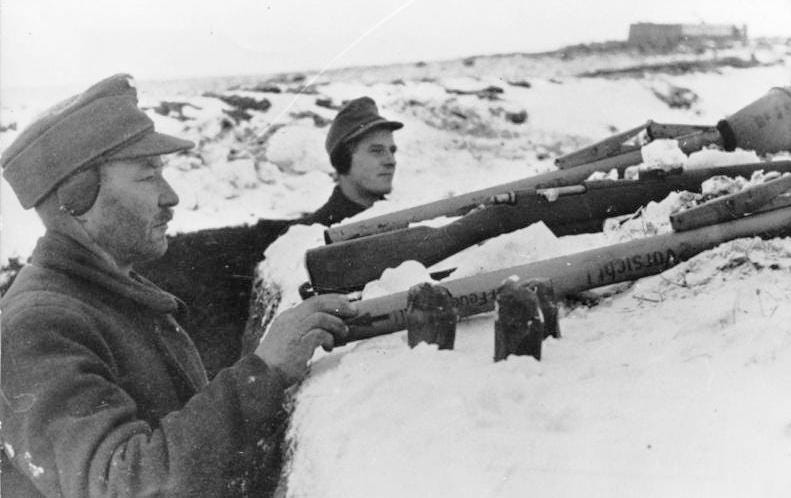

As the Red Army began its advance towards Berlin at the beginning of 1945, it was clear that Germany’s war effort was approaching its final days. It would be in the east that Hitler’s plans of conquest would ultimately be defeated, with the Eastern Front accounting for by far the most vicious and bloodiest combat of the Second World War. Earlier in the war, Germany’s fortunes in the east had looked very different. By late 1941, German troops were approaching the gates of Moscow and Hitler’s hope of a speedy conquest in Eastern Europe was looking increasingly likely.
However, it was not to be and by 1943 the Allies could see that Germany’s days were numbered — with the Red Army now on the offensive and the Wehrmacht suffering irreplaceable losses. In late 1944, Soviet forces had advanced through Poland and as 1945 arrived, the final assault on Germany was to begin. To bring the war to a close Stalin ordered the Red Army to secure the flanks of the Berlin Axis, which would then facilitate a final assault on Berlin. The need to control the Baltic coastline would bring the Soviet Union into the heart of East Prussia — and towards the fortress city of Königsberg.
From the experience of fighting on their own soil earlier in the war, Soviet commanders knew all too well the difficulties of assaulting a fortified city, and the historic port of Königsberg was to be no exception to this rule. Faced with a determined German defence who were now operating on home territory, as 1945 began the stage was set for the Germans and Soviets to clash at the Battle of Königsberg.
The Red Army advances
On 13th January 1945, the Red Army launched its offensive into East Prussia and quickly closed in on the city of Königsberg. Over 1.5 million troops crossed the border and advanced towards the German forces defending the area, with heavy fighting breaking out in the first few days of the offensive. Ivan Chernyakhovsky’s 3rd Belarusian Front and Konstantin Rokossovsky’s 2nd Belorussian Front were tasked by the Stavka (the high command of the Soviet armed forces) with cutting off German troops in East Prussia from those in Poland and pinning them against the Baltic coastline.
After a surge of early German resistance in January, Soviet forces managed to push forward and seize the initiative, leaving Chernyakhovsky’s 3rd Belorussian Front to continue the advance towards Königsberg. His main assault into East Prussia involved four combined-arms armies (the 39th, 5th, 28th and 2nd Guards) and two tank corps (the 1st Tank and 2nd Guards Tank) — alongside additional forces protecting the left flank and in reserve. The savage nature of the fighting during this period was reflected in the fate of Chernyakhovsky himself, who had been the youngest Front commander in the Red Army until he was killed by artillery fire on 19th February. His replacement was Marshal Aleksandr Vasilevsky, a Soviet commander of high distinction who had resigned as Chief of the General Staff to take up the role.
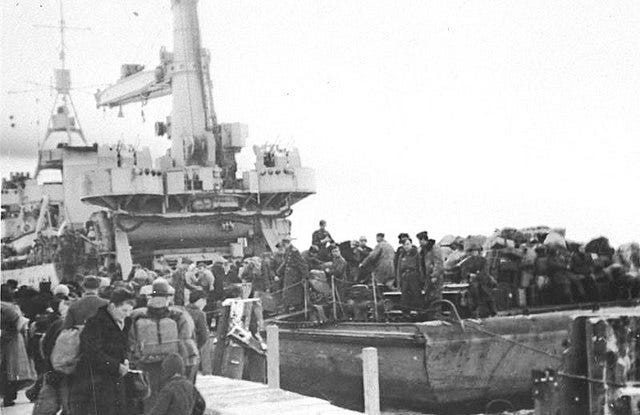

With the Germans now on the back foot the newly renamed Army Group North, commanded by Otto Lasch, would find themselves falling back into the heavily fortified Königsberg — with 130,000 troops now tasked with defending the city from the rapidly advancing Red Army. To ordinary German civilians, the sight of Soviet troops flooding across East Prussia could only have seemed like their worst nightmare had come to life. Marion Dönhoff, a large estate owner, described the Soviet advance in stark terms: “this was the end of East Prussia” she lamented, with the chaos and destruction marking “seven hundred years of history extinguished”.
Many others undoubtedly shared this grim assessment, with those citizens of Königsberg who were unable to escape via ship now forced to choose between eking out a meagre existence within the besieged city, or crossing the front line into Soviet held territory — where atrocities towards civilians was commonplace.
Fortress city
With Königsberg now completely surrounded, its German defenders prepared for the approaching battle. In February, the Wehrmacht attempted to break out of the city and link up with other German forces in Samland to the north — and were eventually successful in establishing a land route between Königsberg and the city of Pillau (via an assault from Pillau). However, the Red Army looked to finally defeat any resistance in the region and clear their northern flank towards Berlin, which meant a final assault on the city was to be undertaken.
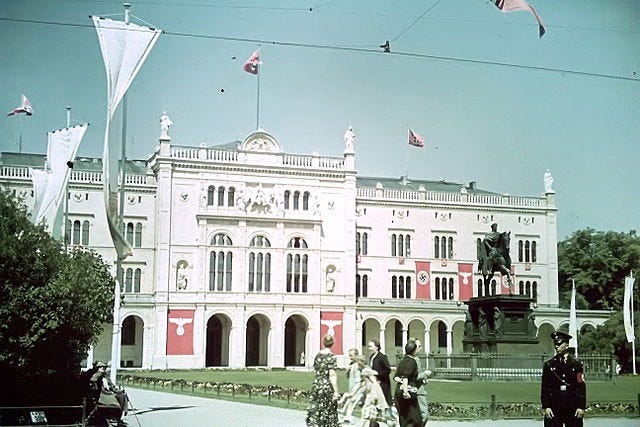

For the Soviets, this would unfortunately be easier said than done. Königsberg was heavily fortified, containing a network of bunkers and tunnels dating back to the 19th century. The city was protected by three fortified rings that the Red Army had to break through, with the city centre itself heavily defended by barricades and mines. The first offensive against Königsberg would come not via artillery or tanks, but through propaganda — with those left in the city warned that they were trapped without hope of assistance and that their resistance was certain to fail.
Ultimately the propaganda was to be of no use. Despite being completely surrounded by the Red Army and cut off from any form of relief, by March 1945 the city still held out. With the Stavka keen to see the advance towards Berlin continue and the war brought to a close, on 6th April the Soviet advance into the city began, transforming Königsberg from a renowned historic port city, famed for its medieval architecture and grand castle, to a vicious battlefield. .
To the last man
The assault opened with a continuous three hour artillery and bombing offensive, which helped to soften up the outer line of defences around the city. Aided by further artillery and air support, the Red Army quickly encircled the outer ring of fortifications within the city and continued their advance towards the central district, leaving rearguard troops to mop up any German resistance. However, as Soviet forces pushed deeper into the city the fighting became fiercer and the German defence stiffened, with Hitler ordering Lasch to fight to the last man and forbidding his troops from surrendering — even in the face of almost certain death.
As a result of this order fighting within the city was particularly ferocious, with every inch of ground heavily contested. With the Red Army approaching the city centre, Soviet sappers used explosives to breach the walled defenses, allowing the assault to continue despite the defensive advantage held by the Germans. During the night of 7th April, the defenders tried once again to break out of the city using their final reserves and were repulsed once more — leaving around 40,000 German soldiers barricaded in the city centre as operations resumed on 8th April.
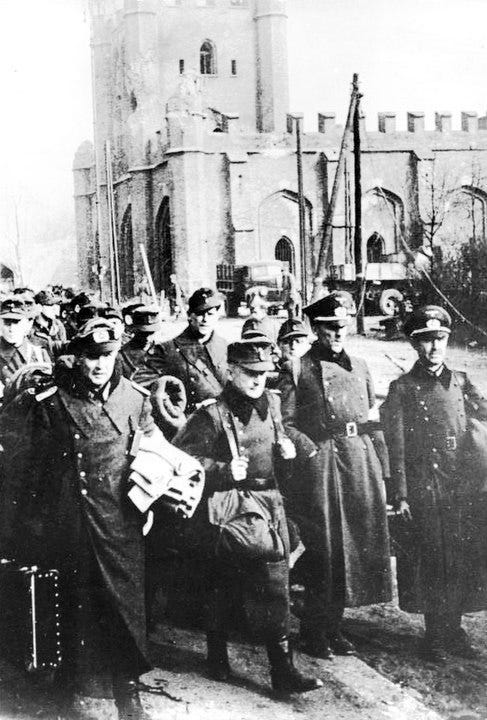

As 11th Guards Army attempted to bring the offensive to an end and capture the heavily fortified central district, every building and strong-point would become the scene of ferocious close quarters combat, with the Soviets relying on artillery support to keep their advance going. With the Red Army closing in on a final victory, Lasch once more attempted to break out of the city in a last act of resistance by the Germans, but Soviet air superiority would ultimately see this effort defeated. On 9th April, with his reserves depleted and defeat now imminent, Lasch defied Hitler’s order and surrendered to Marshal Aleksandr Vasilevski — leaving the Red Army in control of Königsberg.
From the ruins
After days of heavy fighting between the two armies, the extent of the damage done to Königsberg was clear for all to see. Between the Soviet assault and earlier bombing raids by the RAF in 1944, over 80% of the city now lay in ruins, with a number of its great historic forts and defensive walls damaged during the conflict. From a civilian perspective, over 200,000 civilians would flee the city before its eventual fall, fearing a repeat of the atrocities committed by the Red Army in other towns across East Prussia.
Whilst the heavy fighting would have catastrophic consequences for the city itself, the Battle of Königsberg would prove to be an unmitigated triumph for the Red Army. The Germans suffered, by Soviet reckoning, 32,000 killed and 92,000 captured during the offensive, with the Red Army suffering losses that included a reported 3700 killed in the final assault (although further casualties were sustained earlier in the offensive). The relatively small number of Soviet losses represented a major success, highlighting its increasingly effective use of tank, air and artillery superiority over the Germans at this stage in the war. This also showcased the growing skill and fighting capability of the Red Army and its leadership, which had vastly increased in competency since the early calamities of 1941.
Ultimately, the Battle of Königsberg would serve as a warning for the Soviets about the intense fighting that was to come once the Red Army entered Berlin. After taking Königsberg, Vasilevski’s troops would continue their advance along the Baltic coast, and further south the forces of Georgy Zhukov and Ivan Konev would race to capture Berlin itself. On 16th April, a triumphant Red Army would begin its assault on Berlin (via the 1st Belorussian, 2nd Belorussian and 1st Ukrainian Fronts) and yet again Hitler would order his men to fight to the last man, just as he had done in Königsberg. For the Soviets, their experience in Königsberg would prepare them for the fierce fighting that was to come in the German capital — and the stubborn German resistance they would have to overcome to achieve their final victory.